EC Drops First SIR Supplementary Voters' List Late Night
EC Drops First SIR Supplementary Voters' List Late Night

By KUNAL CHATTERJEE
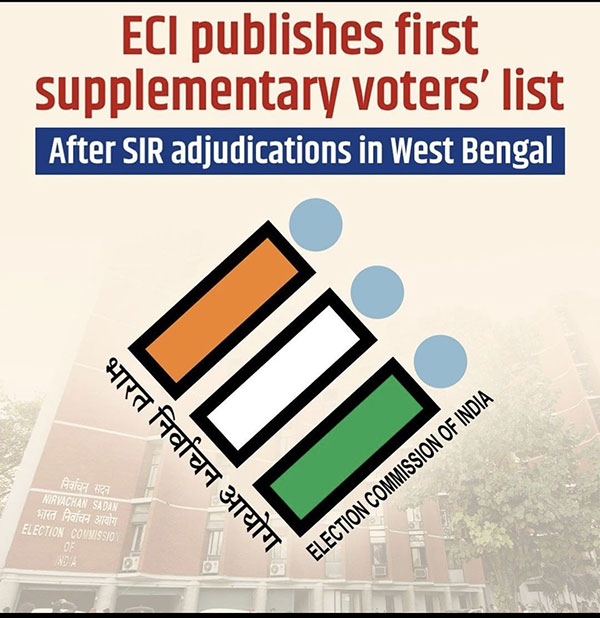
The Election Commission of India (ECI) published the first supplementary voters' list following Special Intensive Revision (SIR) adjudications in poll-bound West Bengal around midnight on March 24, 2026. This list, accessible on the ECI website for each polling booth, includes names of voters whose cases—previously marked "under adjudication" in the February 28 final roll—have been resolved by 705 judicial officers.
Chief Electoral Officer Manoj Kumar Agarwal noted that approximately 29 lakh out of 60 lakh pending cases have been adjudicated so far, with the process ongoing ahead of the 2026 assembly elections.
The supplementary list covers verified voters post-scrutiny, as directed by the Supreme Court, with copies distributed to district election officers and displayed at booths. Around 2 lakh names are processed daily, and excluded voters can appeal via 19 tribunals staffed by former High Court judges across 23 districts.
The state government has alerted police for law and order amid potential unrest during checks. No official figures on deletions or additions were immediately disclosed, leaving many of the 60 lakh affected voters in suspense.
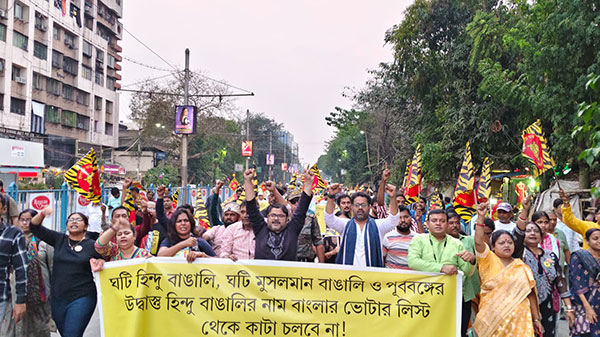
Trinamool Congress (TMC) leaders have sharply criticised the SIR process, alleging it targets legitimate voters, particularly in Muslim-majority districts like Murshidabad, Malda, and Uttar Dinajpur. Chief Minister Mamata Banerjee claimed around 10 lakh names have been deleted, accusing the ECI of BJP influence and delays in list publication, stating, "This is causing days to be wasted."
TMC's Kunal Ghosh alleged harassment leading to voter and BLO deaths, blaming BJP and ECI, with Mamata planning a protest.
While the SIR aims to purify rolls by removing duplicates and discrepancies, critics argue it risks disenfranchising marginalised groups through stringent document requirements, resembling a covert citizenship test. TMC portrays it as a BJP-orchestrated ploy to tilt the 2026 polls, especially after earlier draft deletions of over 58 lakh names sparked outrage.
BJP's Suvendu Adhikari initially praised the "cleansing," but party colleague Dilip Ghosh later objected, highlighting intra-party tensions.
The lack of transparency on deletion numbers fuels suspicions of bias, potentially eroding trust in the electoral process despite judicial oversight.
With appeals ongoing, the final impact on voter turnout remains uncertain, but the row has intensified Bengal's polarised politics.
Explore more opinions, analysis, and insights by Sujit Chatterjee .